
During the Covid-19 pandemic, analysts, commentators and audiences were concerned about the future of the film industry. The rise of streaming services exacerbating existing concerns that theatres would soon be obsolete. Social-media platforms such as TikTok and YouTube shifted attention away from long-form content to shorter, more digestible alternatives. Purists grew concerned about the prevalence of big-budgeted superhero films, and worried that the low and mid-budget indie films would become a thing of the past.
The year is 2026, and while these fears remain, the data suggests a different future. Not one where traditional and New Media were forced to fight for supremacy, but of mutual collaboration between them both, and nuanced growth over a period of years.
My name is Aidan, and today at Soul of the Story we will discuss the trends of the entertainment industry – analysing its past and present to predict its future. But for us to do that, we need to return to the 1980s, when there was a similar fear that VCRs posed an existential threat to the film industry.
The Rise of VCRs

The release of VHS and other VCRs in the late 1970s gave people the chance to rewatch their favourite films from the comfort of their own homes. It was a transformative idea – one that seems obvious with hindsight – and it quickly took off. In 1980, there were fewer than 2 million VCRs in America, but by 1990 there were more than 60 million.
Studios were furious that the long-existing status quo was being disrupted, and argued that home ownership of VCRS violated their copyright. When their argument was disproven in court, they had to analyse the truth of the situation and understand why this new technology was proving so popular.
They came to this one truth: people were drawn to convenience. To them it made perfect sense. Why wait for your favourite film to show on terrestrial television when you can own a copy yourself? When they realised this, studios pivoted, recognising that home video could become an additional source of revenue outside of the traditional structures.
The late 1970s and 80s was dominated by era-defining films that were must-see events. Filmmakers such as Steven Spielberg and George Lucas became synonymous with quality, and not only were their films huge successes at the box office, but they also were popular at home; for instance, Raiders of the Lost Ark had approximately 500,000 pre-sold copies for VHS. Meanwhile, the increasing usage of VHS saw international cinema become increasingly accessible, further entrenching the globalisation of the industry, and inspiring a new generation of filmmakers. Studios saw this, and pivoted.
They came to this one truth: people were drawn to convenience. To them it made perfect sense. Why wait for your favourite film to show on terrestrial television when you can own a copy yourself?
While there was a comparative ‘decline’ of American independent cinema, larger studios were making bold changes, adopting visual effects as the new technology became increasingly sophisticated. George Lucas’s Industrial Light and Magic created effects for films such as Back to the Future, Cocoon, The Goonies, and Aliens – instant classics. The success of these films indicated that major studios were adopting both special and practical effects in their blockbuster films. It meant that while there was success with low/mid-budget films – as exemplified by the rise of figures such as Martin Scorsese, this was mostly overshadowed by the loud, triumphant success of 1980s Hollywood.
In the 1990s, there was a shift. While cinema remained dominated by figures such as Steven Spielberg and James Cameron, filmmakers such as Quentin Tarantino and Martin Scorsese became hugely popular with audiences and critics alike. While Reservoir Dogs grossed $2.9million, a modest success, it was the home video market – and the word of mouth – that saw Tarantino become a household name. Major American studios saw the potential in this market, creating their own independent production companies to capitalize on independent cinema. Tarantino (and others like him) demonstrated that there was a real desire to watch interesting stories that existed outside of the traditional Hollywood Blockbuster.
The 2000s onwards

The rapid rise of the internet in the late 90s/early 2000s was another shift the film industry had to reckon with. The increasingly popular video game industry gave consumers the chance to interact with stories and make their own decisions in a narrative-based environment.
But while this was new competition for film, that was not necessarily a bad thing. Competition in business/art can be a galvanizing force for change and innovation. While companies like Nintendo succeeded with Pokemon, film studios produced multi-project film sagas such as Lord of the Rings, Harry Potter and the Dark Knight Trilogy, attempting to maintain audience attention over longer storytelling arcs.
This was a smart decision, because by the turn of the 2010s, the improvement in technology increased the quality of video games. Grand Theft Auto 5 and Minecraft were record-breaking successes, drawing casual attention towards a rapidly growing industry.
Like in the 1970s, people wanted to enjoy entertainment from the comfort of their own homes. Nothing had changed. Netflix’s emergence was only an echo of what had come with the VHS several decades earlier.
But unlike with VCRs, streaming services such as Netflix, Disney + and Amazon Prime had more power. Within years, films were being distributed exclusively with streaming services. Other films were unsuccessful at the box office, yet saw success on streaming platforms. To them there was no reason to go to the theatre at all. Strategists and executives had to understand why that was.
Covid-19

Matters grew worse in March 2020, when the World Health Organization (WHO) declared a global health emergency, following the rapid spread of COVID 19.
Within days, productions came to a halt. Movie theatres were closed, festivals were cancelled, and film releases were moved to future dates – or in some cases, delayed indefinitely. As a result, the global box office plummeted, coinciding with a spike in the usage of streaming services. Within the first half of 2020, Netflix had added at least 25 million new members, while film exhibitors and distributors saw their stocks drop dramatically.
This change exacerbated the pre-covid fear that soon movie theatres would become obsolete. Films that were once released in cinemas became increasingly released exclusively on streaming platforms; with films such as Red Notice, Carry On and The Adam Project receiving high streaming figures. These were films that once would have been released traditionally. But not anymore. Now, they were released online.
The power was with the streamers, and during this period, it seemed like every studio had their own streaming platform that required a monthly subscription. See below for just a handful:
- Disney + (196 million).
- HBO Max (155.6 million).
- Paramount + (79.1 million).
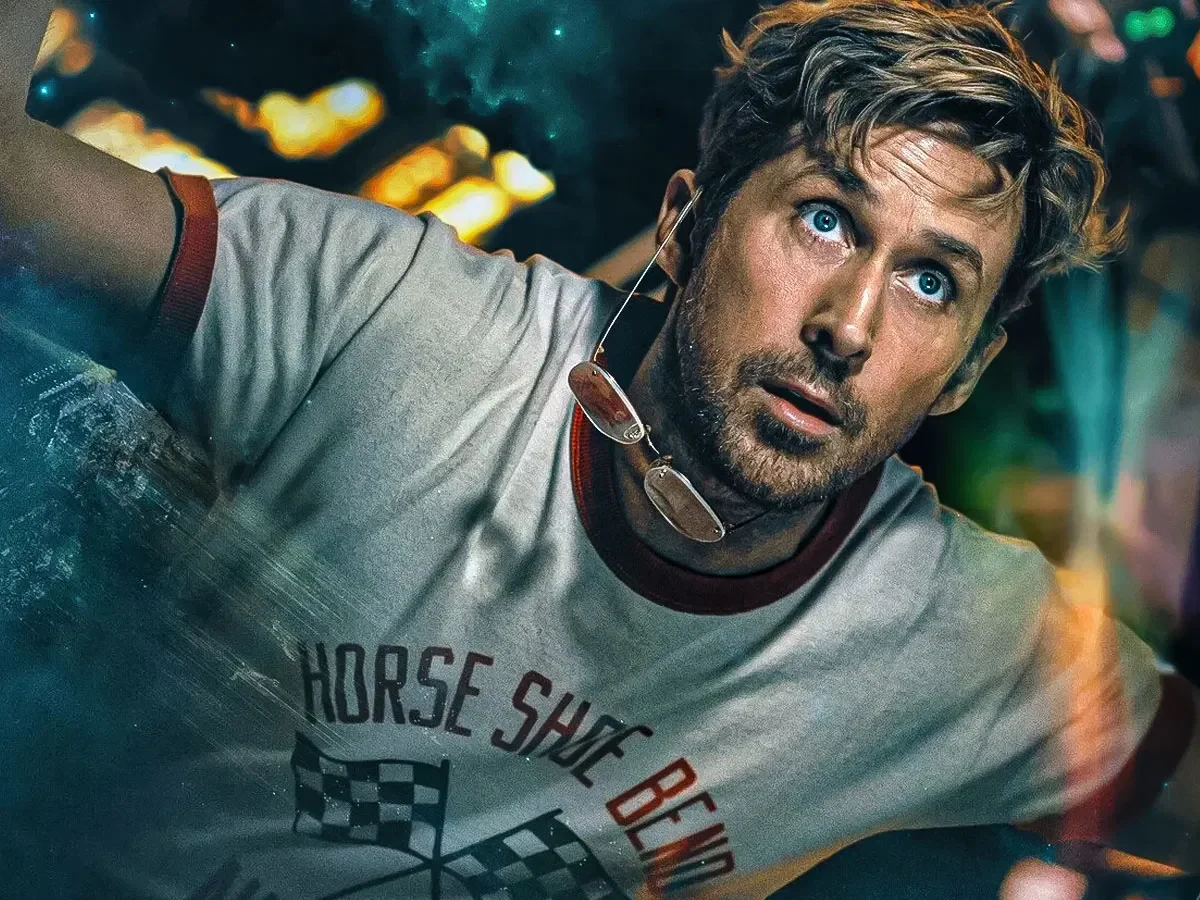
But was this a positive thing? Netflix’s biggest-budgeted film of all time – The Electric State – was released and forgotten about in weeks. The Gray Man – a film pairing A-Lister Ryan Gosling with the Russo Brothers, failed to impact the cultural zeitgeist. Streamers were trying to recapture the magic of the movie theatre with blockbusters that went directly to people’s homes. But were they successful? That was another question entirely.
A Look to the Future

Following the end of 2025, many were disappointed and concerned about the state of the film industry. For the second year in the row, Film had failed to gross $9 billion in domestic ticket sales. Prior to the pandemic, American revenues would regularly hit between $10 billion to $11 billion.
But rather than acting all doom and gloom about the situation, it is important to look at the situation in its totality. While American film has experienced a gradual decline, struggling to regain the triumphant highs from before the box office, international film has continued to grow.
Global film production is also growing, and in 2023, 9,511 films were produced compared to 9,328 films in 2019, pre-pandemic.
While some of these productions will go directly to streaming, that doesn’t have to be a bad thing. Netflix and other streamers have proven that they can produce high-quality drama that can succeed during awards season. They showed that in Frankenstein, All Quiet on the Western Front, The Power of the Dog and The Irishman. With streaming platforms, these films are increasingly accessible.
But when you are trying to appeal to the widest-possible audience, you have to make its impact feel real and connected to the real world. They don’t want to watch a film that feels like it was produced for the sole purpose of drawing the widest possible net. They want to watch films that have influenced the cultural zeitgeist. They want to talk to their colleague about a film that made the news recently.
But when you are trying to appeal to the widest-possible audience, you have to make its impact feel real and connected to the real world.
While film has so many competitors, audiences will always return to this medium. People need to be given a reason to go the movie theatre. They want to watch authentic, well-told stories. That was evident in the 1990s with the rise of Tarantino, and it is evident now.
Audiences are tired of formulaic, generic products. In the gaming industry, it is notable that many of the creators of Clair Obscur: Expedition 33, were former developers at Ubisoft, a gaming studio that has been given that same criticism. Today, Expedition 33 is considered one of the best games of the past decade. If Kelper Interative did not agree to publish it, then the world would be worse off.
Film needs to take risks. Like with Clair Obscur and Quentin Tarantino, the talent is there, they are just waiting to be unearthed.
There was a real desire to watch interesting stories that existed outside of the traditional Hollywood Blockbuster.
References
https://www.lucasfilm.com/news/40-years-ago-raiders-of-the-lost-ark-on-video
https://www.npr.org/2016/08/06/489002713/how-the-vcr-began-americas-love-of-on-demand-content
https://filmustage.com/blog/vertical-drama-explained-what-you-need-to-know-in-2026/
https://www.wipo.int/en/web/global-innovation-index/w/blogs/2025/global-film-production
https://www.smithsonianmag.com/history/the-making-of-steven-spielberg-180981184/
https://www.sae.edu/gbr/insights/how-technology-is-revolutionising-film-production
Leave a Reply